
40 parting thoughts from Texas
Lessons from a larger-than-life place

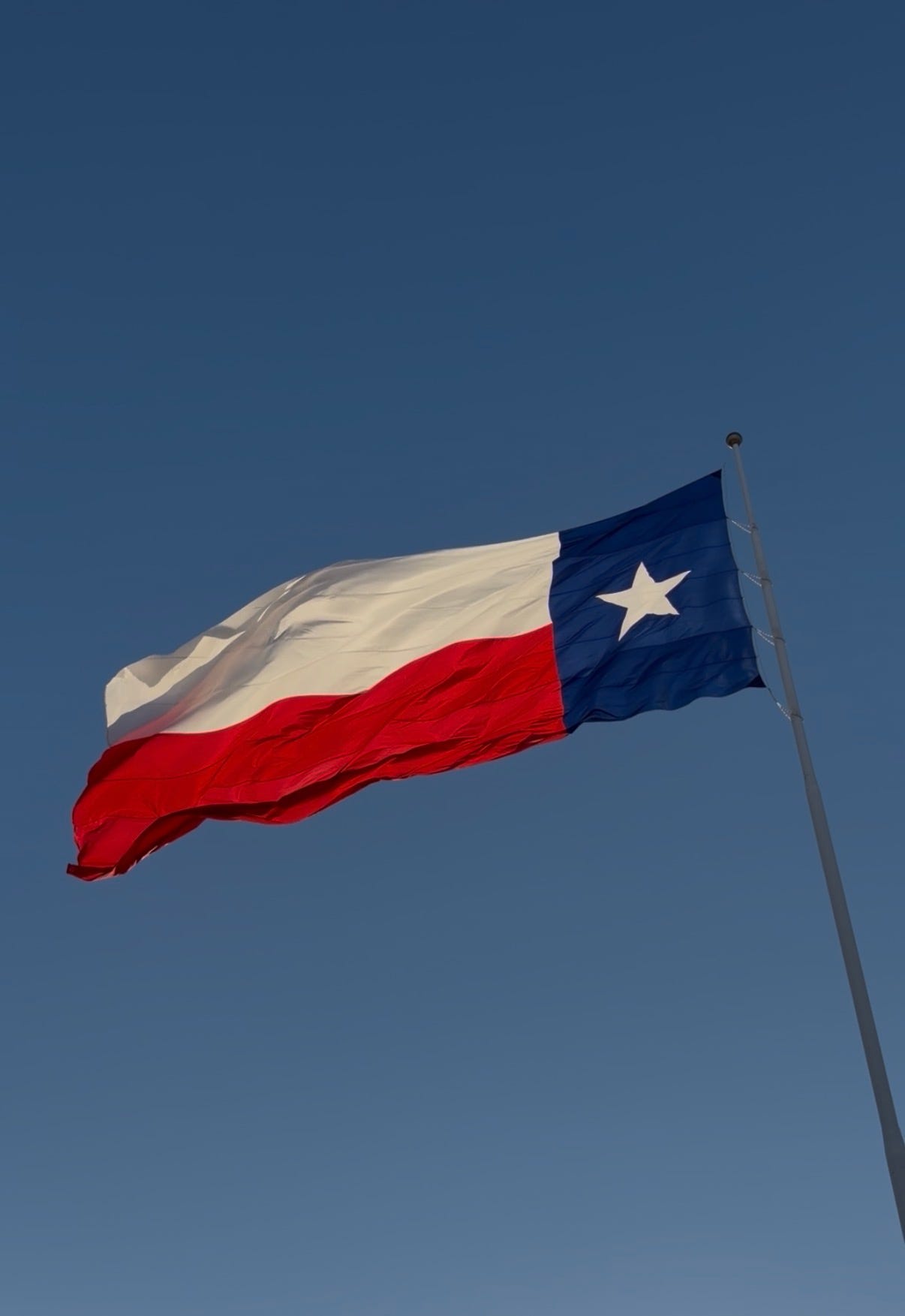
I always knew Texas deserved its own trip. In fall 2023, as I went through the South on my maiden solo journey, I spent a night in southwestern Arkansas, very near the Texas line. It felt like being just outside a massive stadium; I wanted to peek in so badly, yet knew getting a mere glimpse wouldn’t do the contents justice. This spring, I finally got the chance to devote seven weeks to just Texas. Here’s what I’m taking away from my time in the Lone Star State.
1. There’s a secret local way to say Texas.
Most Americans have only heard it pronounced Tex-iss, but lots of Texans say the second syllable like the word “is.” Hearing Tex-is rang a bell for me; I already knew a Texan who said it that way, yet had assumed it was a quirk of her personal dialect. Texans still use the Tex-iss pronunciation in formal settings like news reports. But “all my exes live in Texas” is a perfect rhyme after all!
2. Your state can have two highway systems if it has the courage.
In addition to its normal state highway network, Texas has a system of highways called farm-to-market roads (some rural ones are “ranch-to-market”). Though designed to—you guessed it—connect farms and ranches to towns, many now serve as arterial routes through suburbs and exurbs. If you’re driving between smaller cities or from a city into the country, FM roads will inevitably make up much of the route; in fact, the FM/RM system covers more than twice the mileage of the “main” state highway system. Because they are so numerous, FM roads are often identified by four-digit numbers, which can make Texan business locations unrecognizable to out-of-staters.
3. The Come and Take It flag is nonpartisan.
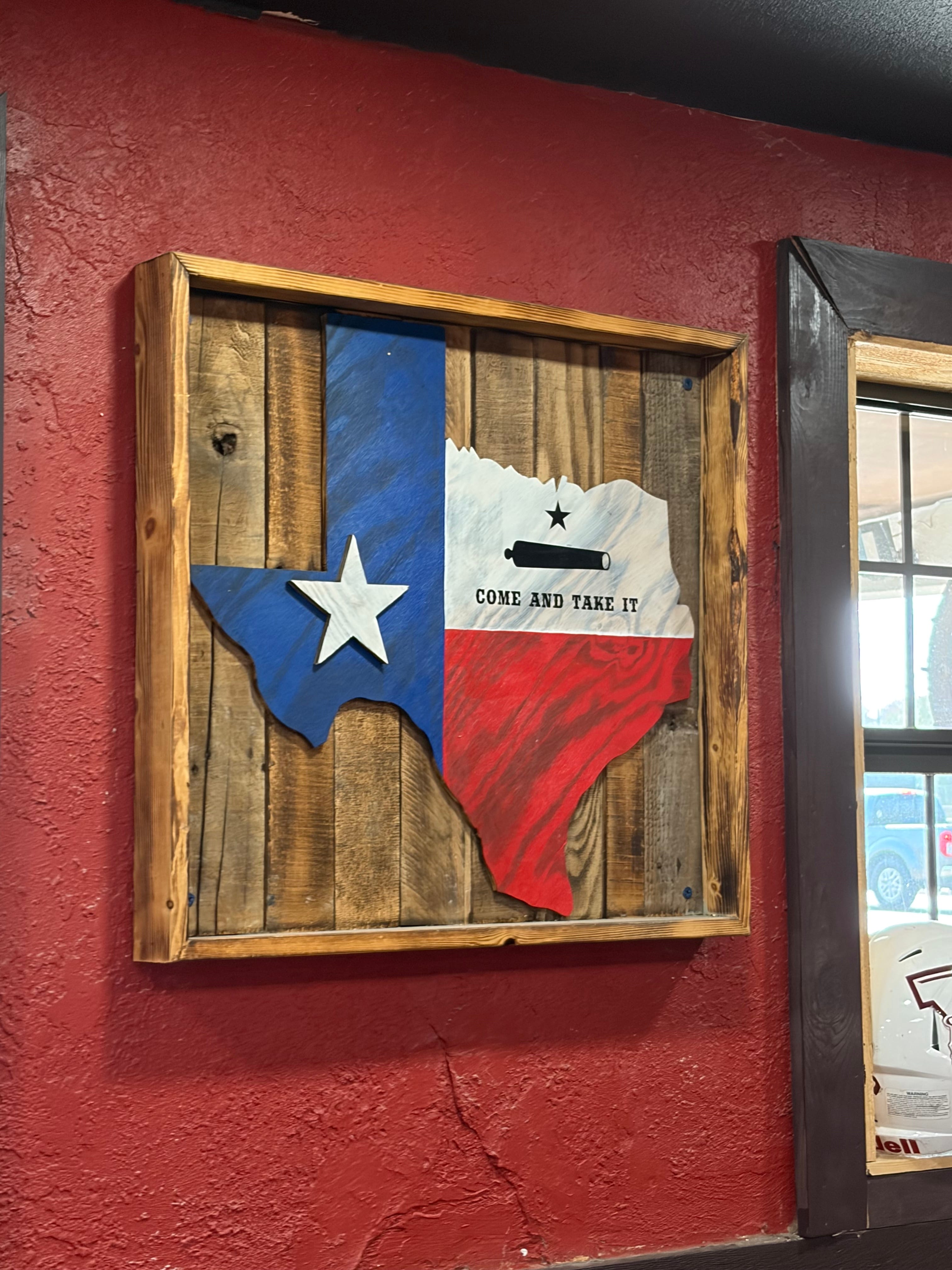
If you follow politics, you might associate the “come and take it” slogan with libertarian gun-rights advocates, but it has its roots in an incident from the Texas Revolution, when Texas won its independence from Mexico. (Yes, Texas was its own country!) The Texans refused to give back a cannon loaned to them in peacetime, thereby birthing the taunt. I spotted the original “come and take it” flag in both liberal and conservative areas as a marker of state pride.
4. Handmade tortillas are a game-changer.
I knew the Mexican food would blow my mind, but not how that would happen. The answer came quickly; my first lunch plate (carne guisada at Corpus Christi’s Hi-Ho Restaurant) came with two hot, pillowy flour tortillas that were more like a fresh basket of Indian naan than anything I’d had at a Mexican restaurant. Their corn counterparts, ubiquitous at Rio Grande Valley taco stands, were perfectly chewy with just enough good grease. Scratch-made tortillas stand on their own; you’d be hard-pressed to find a Texan who hasn’t eaten H-E-B butter tortillas straight out of the bag.
5. Whenever just means when.
Most people use whenever only when the timing of an event is uncertain or irrelevant: whenever the package comes, let me know. Texans, though, are liable to use whenever as a catch-all substitute for when. For example, I would say when I was in fourth grade, I always played kickball at the park. In Texas, that sentence would frequently turn into whenever I was in fourth grade. Most Texans were unaware of how local this phenomenon is (I’ve never heard it anywhere else).
6. George Strait is the most popular Texan.
Of everything I saw in Texas, the biggest culture shock might have been watching Black and Hispanic teenagers at dancehalls mouthing the words to George Strait’s ‘80s hits. As the most successful country singer ever, Strait transcends demographics, but his distinctly Texan persona—ranch upbringing, degree in agricultural sciences, son who competed in rodeo—elevates him to icon status in his home state.
Strait is the face and voice behind some of the best-written country songs ever (in his day, it was exceedingly rare for stars to write their own material). His catalogue has it all: uptempo singalongs, slow dances, and longing ballads. If you want to understand Texas, you could do worse than working your way through his 31 studio albums.
7. Pool is a vital social outlet.
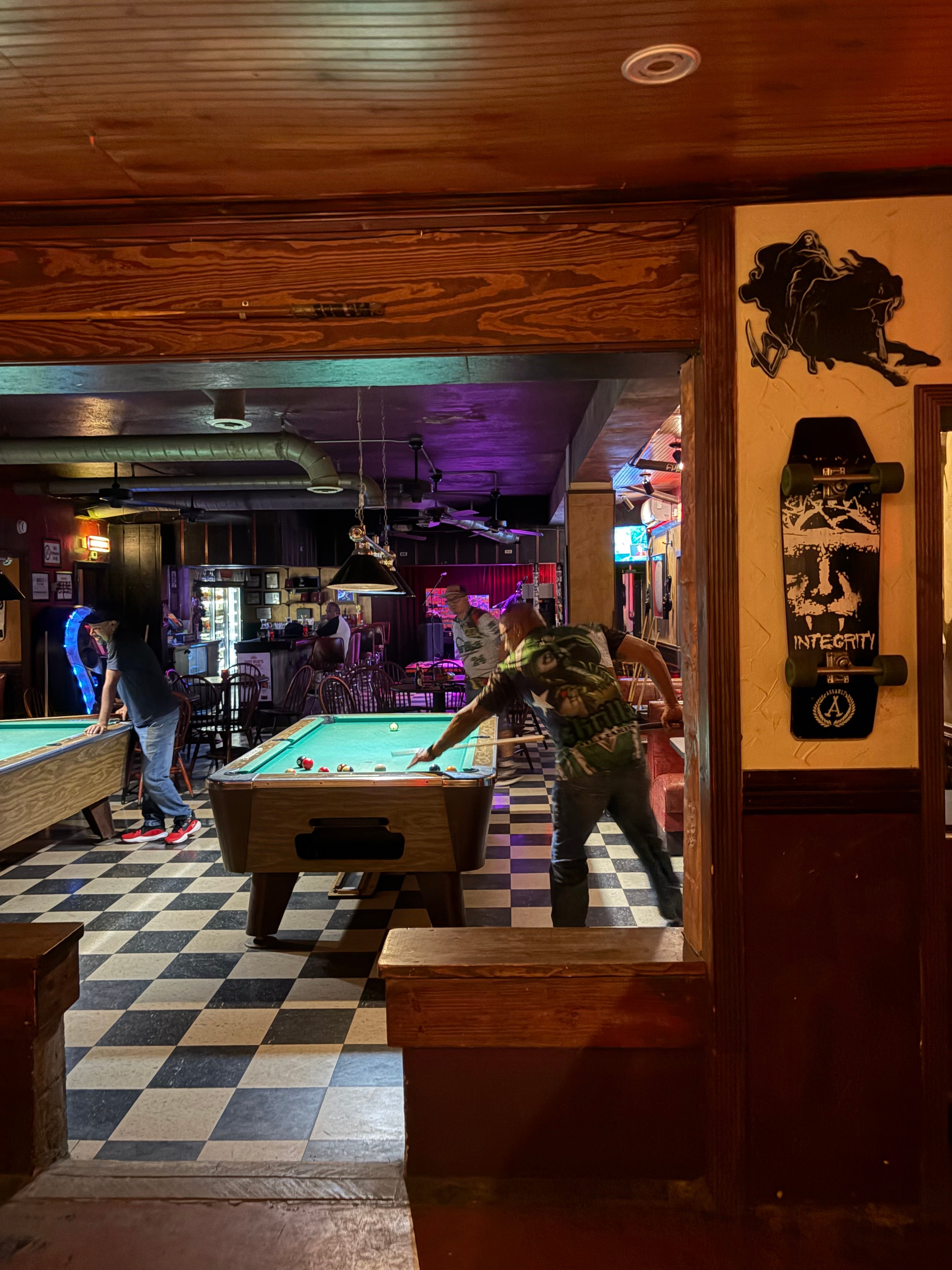
I’ve never been to a place where pool is responsible for so much social connection. Almost every bar I went to had pool tables. If I parked myself beside them someone inevitably offered to play with me or call dibs on the next game, thus starting a conversation.
Asking someone to play pool is the closest this non-smoker has come to replicating the intimacy of offering someone a cigarette. It gives you a reason to pull someone away from noise, stand next to them, and share an activity. People I played one game with became my wingmen for entire nights, even inviting me to bar-hop with them. Doubles games are perfect for mixing friend groups that would otherwise keep to themselves. No one’s scared to play because the competition isn’t cutthroat.
Pool’s prominence has lots of positive side effects. If you don’t need to pay for drinks to socialize, nights out become way cheaper. League play puts a regular social event on the calendar, sometimes for years. Tables at dancehalls rescue shy people from the miserable fate of staring at their phone in the corner.
I didn’t grow up with 8-ball and improved only marginally this trip, but did manage one highlight. A new friend and I teamed up against two guys she convinced to wager $20 on our game. (It was past 1 a.m., and I think she astutely realized I was the only sober person left.) Feeling the pressure, I summoned youth-sports adrenaline to make a clutch bankshot. After we beat them I thought I was out of the woods until one of them blurted to her impulsively: double or nothing? She accepted, we somehow toughed out another victory, and I walked to my car feeling like a million bucks.
8. Texas Turnarounds are a godsend.
If you need to make a U-turn in Texas, chances are the next major intersection has a protected lane for you. This extraordinarily useful infrastructure, far less common in the rest of the U.S., turns missing an exit from a potential ordeal to a complete non-factor. If you usually drive in the left lane, though, just know it’s liable to become U-turn only.
9. Beef laps the field of meats in popularity.
This was a similar culture shock to traveling the Midwest and South and discovering football is an order of magnitude bigger than other sports. Beef’s dominance seemed strongest in the Rio Grande Valley, where taco menus routinely feature five beef choices (e.g., bistec, lengua, tripa, desfelada, barbacoa), one pork, and no chicken. In making brisket the centerpiece of its barbecue plates, Texas is an outlier; across the South, utter the word barbecue and you’re assumed to be talking pork.
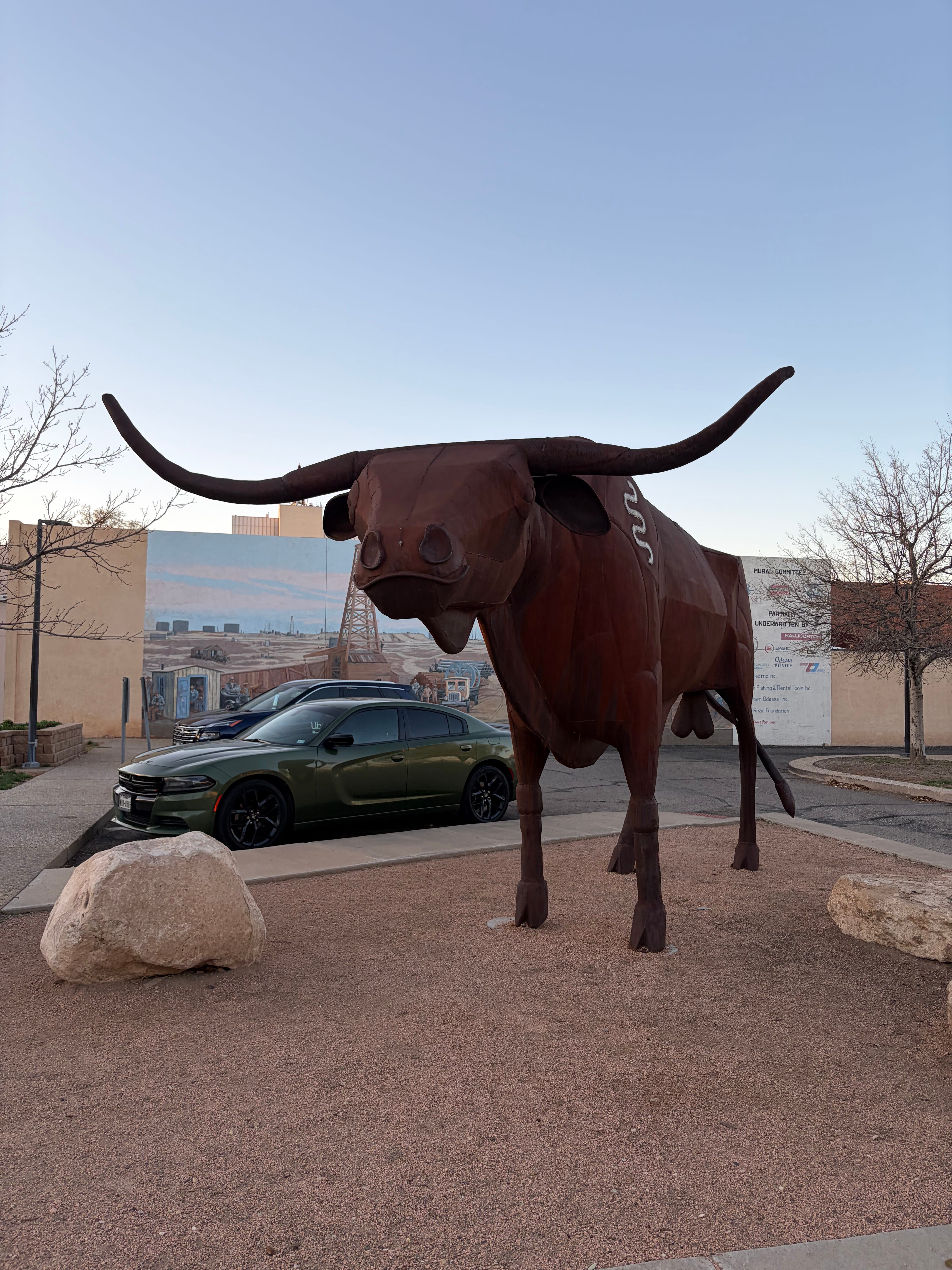
10. A rodeo is three (or four) events, not one.
In the order most people experience them:
The fairgrounds. They’ll greet you when you arrive; you can play carnival games, eat funnel cake, take photos with the rodeo queen, and watch high schoolers show hogs. At the very least, these are cheaper to get into than the rodeo events; at smaller rodeos, they may even be free.
The rodeo events. Bull riding, tie-down roping, barrel racing, etc. These last two hours at most.
The expo hall. At smaller rodeos, this area may be reduced to a few booths on the fairgrounds, but at larger ones it resembles a convention center. Here local vendors (think clothing and furniture) give rodeo-goers a chance to cool off and shop.
The concert. Immediately after the rodeo events conclude, live music fills the arena. Looking up the headliners is a good way to tell how big a deal a rodeo is. (Houston is the pinnacle; this year they pulled Luke Bryan and Kelly Clarkson, among many others.) A rising country artist might spend much of their spring playing rodeos.
Because they have something for everyone, large rodeos are events that entire communities pay attention to; businesses hang up HAPPY RODEO SEASON signs. With rodeos in springtime and county fairs over the summer, I was struck by how many chances Texans get to experience communal festivities. You can see how 4-H kids are busy!
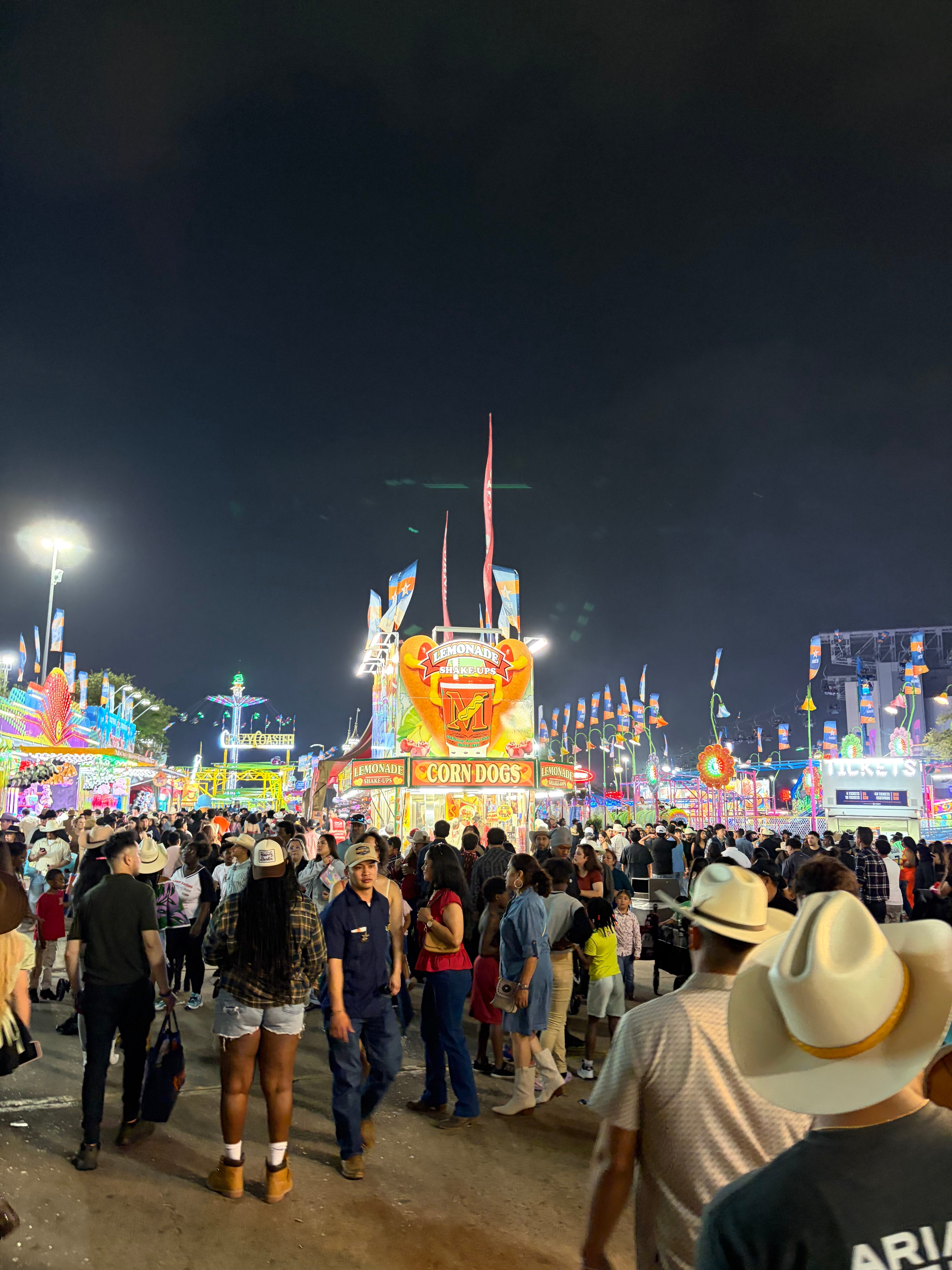
11. In Austin, you can go to 24-hour coffee shops.
Austin is the only place in America I’ve seen round-the-clock coffee shops; they’re not even a thing in New York City. Given Austin’s booming tech sector, I figured a pandemic surge in remote workers was behind this, but the 24-hour culture was in place before Covid and has actually weakened of late. These cafés aren’t gimmicky places that would be afterthoughts if not for the crazy hours; they’re just ordinary spaces that never shut down. Epoch Coffee, where I posted up for conversations each morning, closes for only six hours each week.1 And yet I still felt the pace of life was unrushed—a hallmark of American life outside coastal cities. (This was true throughout Texas except for Dallas; more on that later.)
12. Burritos can be snacks.
Before this trip, my concept of a burrito was stuffing a tortilla with as many fillings as possible until it’s about to rip. When I noticed burritos going for under $5 at an El Paso lunch spot, I wondered how it was possible. My pork chile colorado burrito tasted great—but the meat was the only thing inside. This was more of a snack than a meal. In retrospect, it makes sense that I saw more people eat burritos for breakfast than dinner.
13. Texans shoot from the hip.
Gone is the passive-aggressiveness of the Deep South and the conflict avoidance of the Midwest. No one in Texas will let you forget where you are or who they are. It’s fitting that many Texas traditions, like rodeos and dancehalls, involve in-your-face displays of culture. As a Masshole, I felt an unexpected kinship with their vulgar pride.
14. “Pero” is a common transition word in Spanglish.
Estoy muy cansado esta noche pero I still need to get this work done.
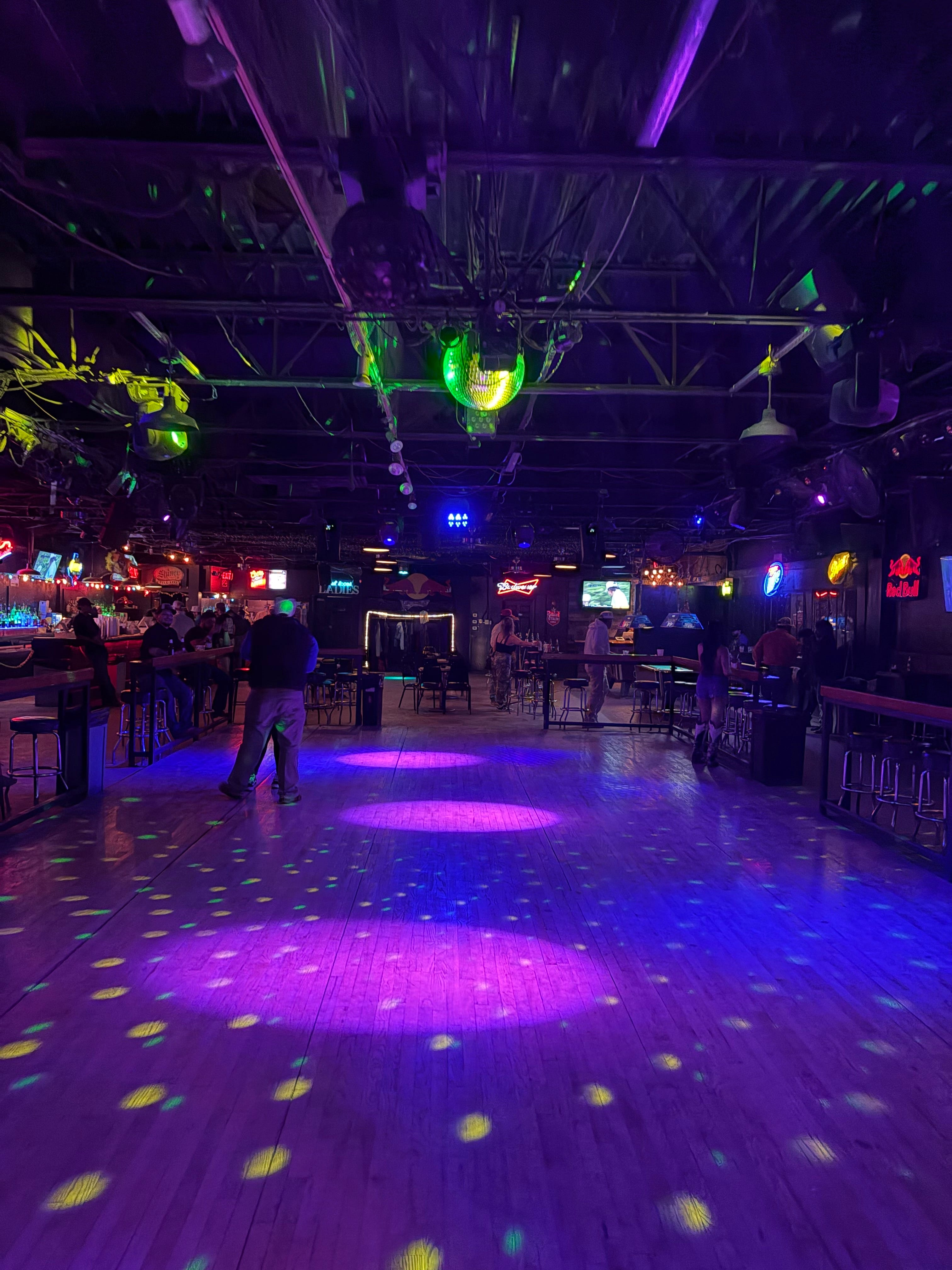
15. Dancehall culture is strong.
In Texas, dancehalls are fixtures in small and large communities alike. Always longer than tall, they look like warehouses or supersized barns; many lie in industrial districts where their massive dirt parking lots aren’t an issue. All but the biggest dancehalls are two-day-a-week operations. On Fridays and Saturdays, a large portion of the under-30 population (there are plenty of gray-haired regulars, too) flocks to the dance floor. I was shocked by how consistently good the DJing was, with thoughtful transitions and slow dances thrown in at the right time. Some dancehalls dedicate part of an evening to structured line dancing, but for the most part it’s a free-for-all. Besides serving as social venues, many give performance opportunities to up-and-coming bands. They are inexpensive; cover charges generally run $10 or under.
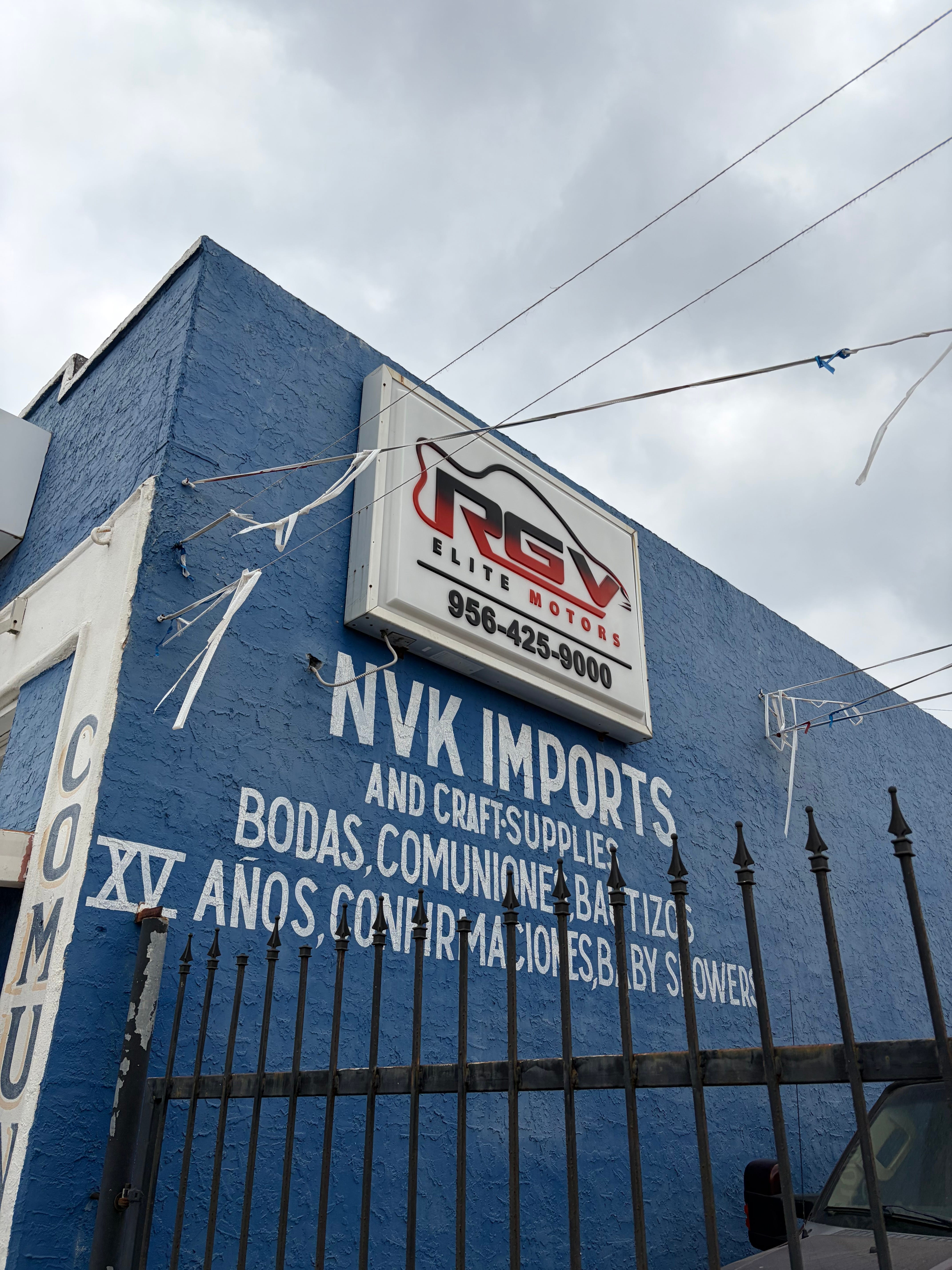
16. Mexican business owners like to paint signage directly on facades.
I really loved this; it gives genuine personality to streets that would otherwise be forgettable. The writer Chris Arnade has theorized this phenomenon took hold because family operations aren’t beholden to corporate appearance guidelines. To me, this explanation is only partially satisfying. I’ve been to other parts of the U.S. where independent businesses predominate (not least my hometown of Cambridge, Mass.) and you just don’t get reds and oranges popping out at you walking down the street. I noticed this phenomenon in both urban and rural Texas so long as the area was heavily Mexican.
17. Oil isn’t rocket science.
The oil industry might have its chemical engineers and number-crunchers, but its premise is pretty simple: drill into the earth and suck up as much fuel as you can. As a result, most day jobs in the oil industry are repetitive. Lots of hauling, mixing, and getting dirty. That means your average oilfield worker is not a wonk. People in climate-conscious industries might assume anyone dealing with oil thinks about environmental politics a lot. But most people I met in the Permian Basin don’t have much energy left after putting their bodies through it during the day and drinking it away at night.
18. You can drive on the beach.
I drove on sand for the first time in my life on North Padre Island. All it took was walking into a gas station and buying a $10 permit. The surface was hard and well-packed, so it didn’t feel risky. With the beach miles and miles long, it made total sense.
19. Classic country is a storyteller’s dream… and maybe a roadmap to healthier emotional expression.
Many pop songs focus on a night, an emotion, or a person. Classic country is more ambitious, often telling the story of an entire life (see: “Don’t Take The Girl”). I always wondered why country music was so reliant on punchlines. Hearing how narrative-driven the classics are, it clicked—you need a punchline to tie all the action together.
If you want to feel your feelings, listen to classic country. Before I knew it, I was crying in the car with Keith Whitley on the radio. Notably, lots of these sentimental tracks were performed by men in their 20s and 30s. Today, I rarely meet young straight guys who are comfortable sitting with intimate emotions, let alone sharing them. I wonder if classic country could give them the permission structure they need. If men in cowboy hats singing about rural life isn’t sufficiently masculine anymore, what is?
The playlist below is a collection of songs I discovered while traveling through Texas.
20. Outside big cities, Texans wear cowboy hats in everyday life.
In the metros, I only saw people wear hats when the occasion called for it (rodeo or dancehall). But across South and West Texas, they’re worn as matter-of-factly as baseball caps. I grew desensitized to seeing them on weekdays in coffee shops or through the window of the car beside me at a red light. The rules for handling hats—never grab one by its brim, the bow always goes in the back—are second nature there.
21. Houston is everything, everywhere, all at once.
Any discussion about Houston has to start with driving. Locals like to say it’s an hour from Houston to Houston, which is true even without traffic. (By area, Houston is the largest city in America not consolidated with a larger government.) I passed under gnarly spaghetti junctions and took some offramps so high they felt like roller coaster inclines.
The drive that struck me as quintessentially Houston was Westheimer Road, which starts as a busy but neat street in the trendy Montrose district and balloons to an eight-lane speedway flanked by towers and strip malls. You whiz by a pawn shop here and a tax prep office there and there’s a Yemeni restaurant next to a Korean nail salon. Someone turned the entropy dial up to 11.
Ordering random pastries at coffee shops is my favorite way to gauge a city’s food scene; Agora’s cherry danish, one of the best danishes of my life, was a prescient appetizer for the week to come. Before my time in Houston was over I’d had top-class dishes of all kinds, from Thai curry to British fish and chips.
There’s no better place to experience the joyful chaos of Houston than at its rodeo, the world’s biggest. I spent a day there being utterly overstimulated: ears ringing from the Tejano concert, eyes surrounded by garish carnival signage. Kids thirsty, parents sweaty, somehow everyone happy.
Few places in the U.S. match Houston’s extreme variety and scale. New York City comes to mind, of course. But while a walk through Manhattan’s streets is the ultimate exercise in serendipity, the Big Apple’s social circles are less coincidental. Who you know is highly correlated with what you studied in college, how old you are2, and whether you’re a native or transplant. Houston friend groups feel more randomized and malleable.
Houston doesn’t give you any instructions, but does it ever reward an open mind.
22. Texans think about their in-state lineage.
In conversation, lots of people mentioned how many generations their family has been in Texas; it never came off as a brag. I haven’t been anywhere else in the U.S. where lineage comes up nearly as often (though maybe Utah will give them a run for their money). It was especially fascinating meeting people with one foot in traditional Texan society and the other firmly in 2026, like the sixth-gen sorority girl immersed in K-pop fandom.
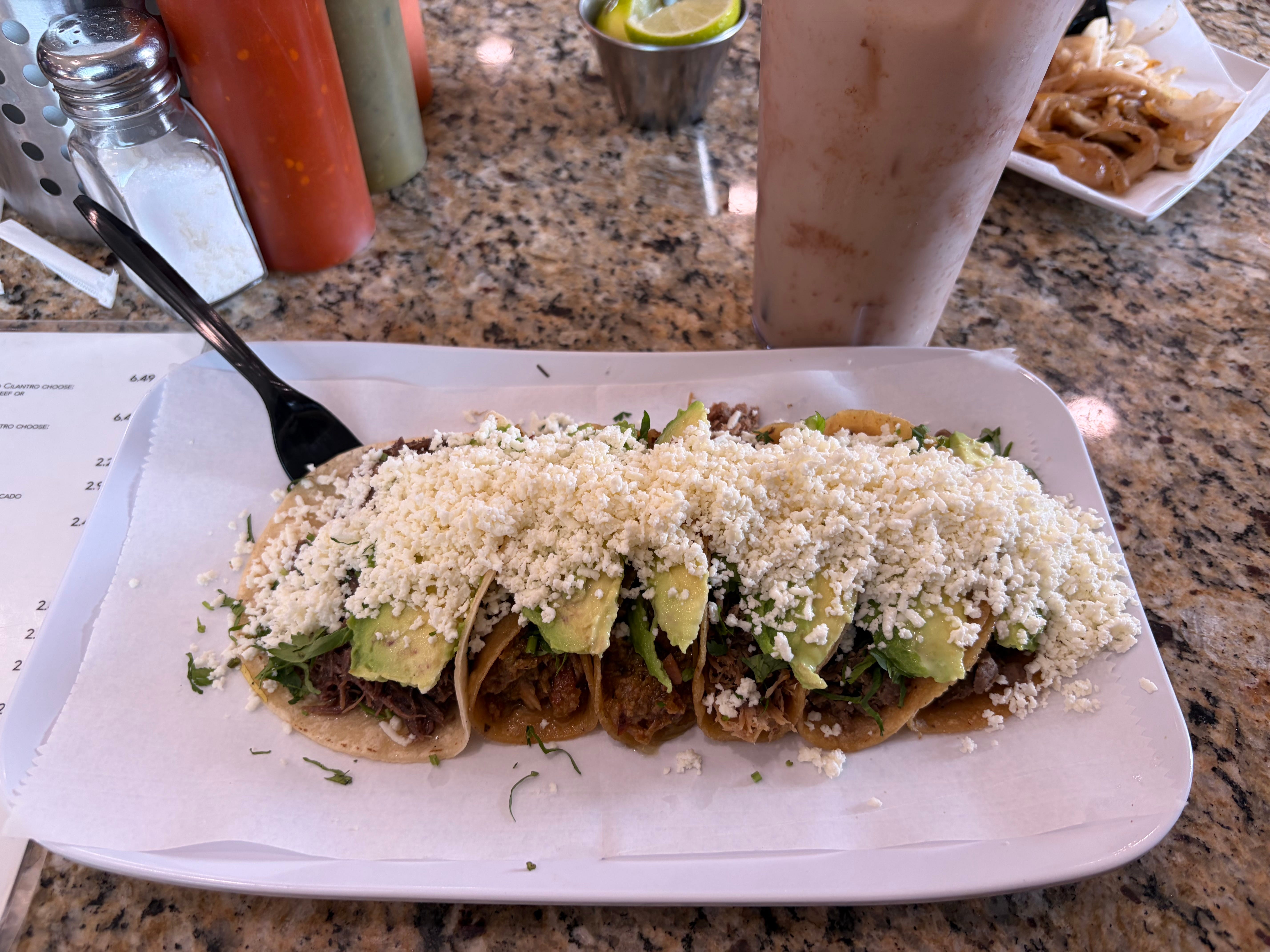
23. Matamoros-style tacos make others feel like a ripoff.
In Brownsville (which borders the Mexican state of Matamoros), tacos are served by default with onions, cilantro, queso fresco, and avocado slices, with additional caramelized onions on the side. And you’re telling me guac is extra?
24. Dallas tolls are no joke.
Dallas’ tollways are more expensive than their counterparts in Houston and Austin. Additionally, the Dallas metro has a robust system of express highway lanes that use dynamic pricing to keep traffic moving. Even though I didn’t buy a toll tag and went back and forth between Fort Worth and Dallas more than someone typically would, the $250 bill that showed up in my mailbox was a bit of a shock.
25. Few people go to dancehalls alone.
This makes it harder than you’d think to dance with strangers. Most parties at dancehalls are either people on dates or large friend groups. Singling out one person in a group is awkward; dancing with everyone one at a time is disruptive. So the only time I two-stepped was when an Abilene grandpa noticed me alone and implored me to dance with his (probably 60-year-old) daughter.
26. I’m still not sure what red dirt is.
I heard lots of people proclaim their love for “red dirt” country music. Whether a song or artist qualifies as red dirt seems to be a two-part test. The music must sound reasonably traditional—no pop elements and generous pedal steel. Spiritually, the artist should have an independent streak and an unvarnished personality. While the term “red dirt” unambiguously originated in Oklahoma, there is debate over the extent that red dirt overlaps with “Texas country” (which has a similarly hazy definition).
27. Despite wild distances, Texans are well-traveled within Texas.
Texas is around 100,000 square miles larger than California, the next biggest Lower 48 state. And yet every spring break, hordes of North Texans hit the road for Port Aransas (roughly equivalent to a Los Angeles-San Francisco trip). I met a Texas Tech student who drives home to Beaumont for holidays, which is like someone in New York City going back and forth from Wilmington, N.C. Most impressive was the guy from El Paso dating a girl from Edinburg and playing football in Wichita Falls. For her to visit, it’s nine hours to his college and eleven hours—Chicago to Washington, D.C., if you’re keeping track—to his hometown! If I’d grown up playing youth sports in Texas, I’m not sure I would have survived the bus rides.
28. Laundromats can be called washaterias.
Pronounced like cafeteria. I like how it doesn’t leave any room for confusion!
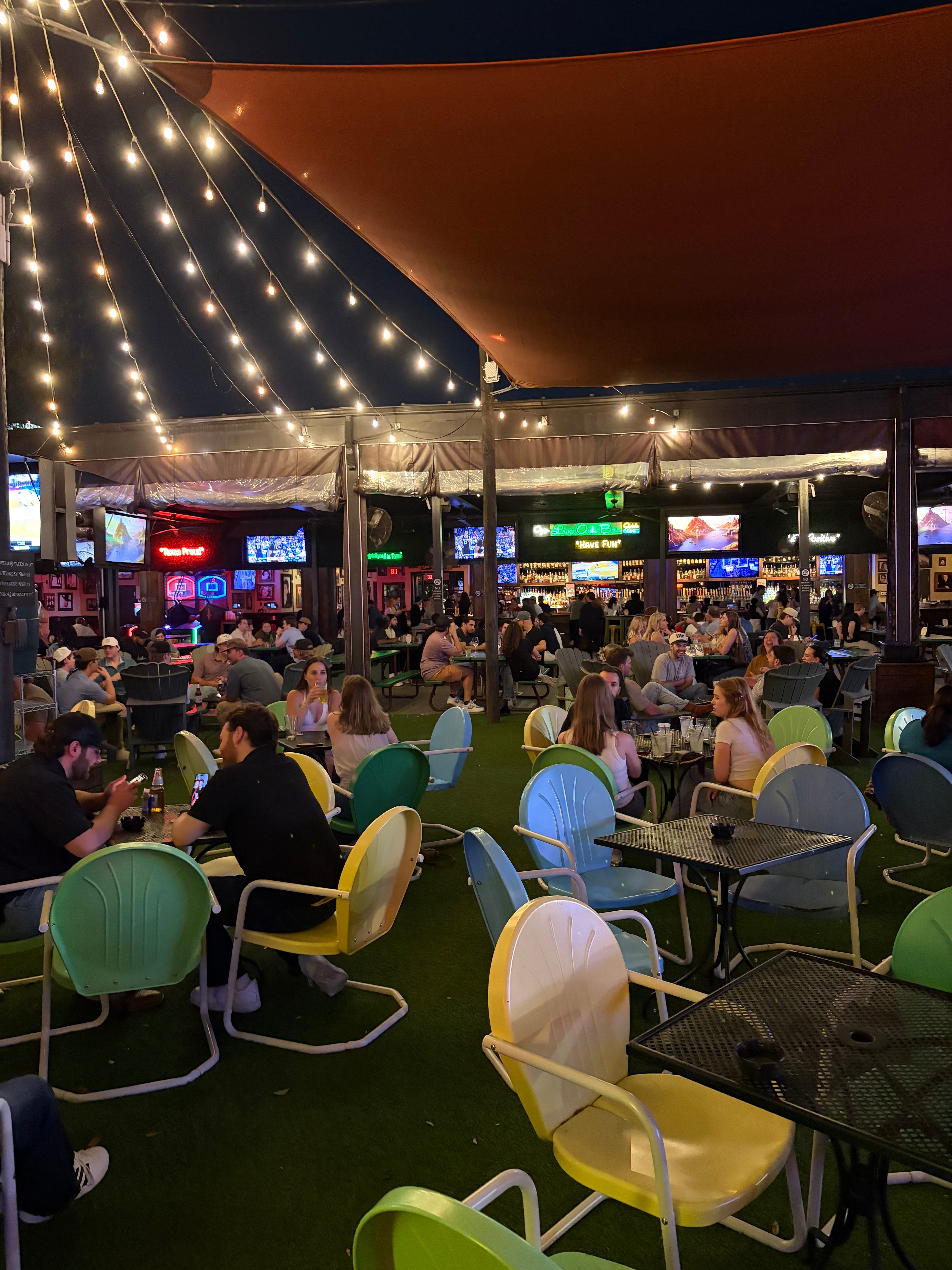
29. (Some) bars can be called ice houses.
A bar that includes “Ice House” in its name always prefixes it with a proper noun (e.g., Katy Trail Ice House, I-10 Ice House). The term can’t be used for any old bar; it denotes an indoor-outdoor joint with a large patio. Ice houses are not dive bars—they’re generally very pleasant with crowds too big for you to stand out as a non-regular.
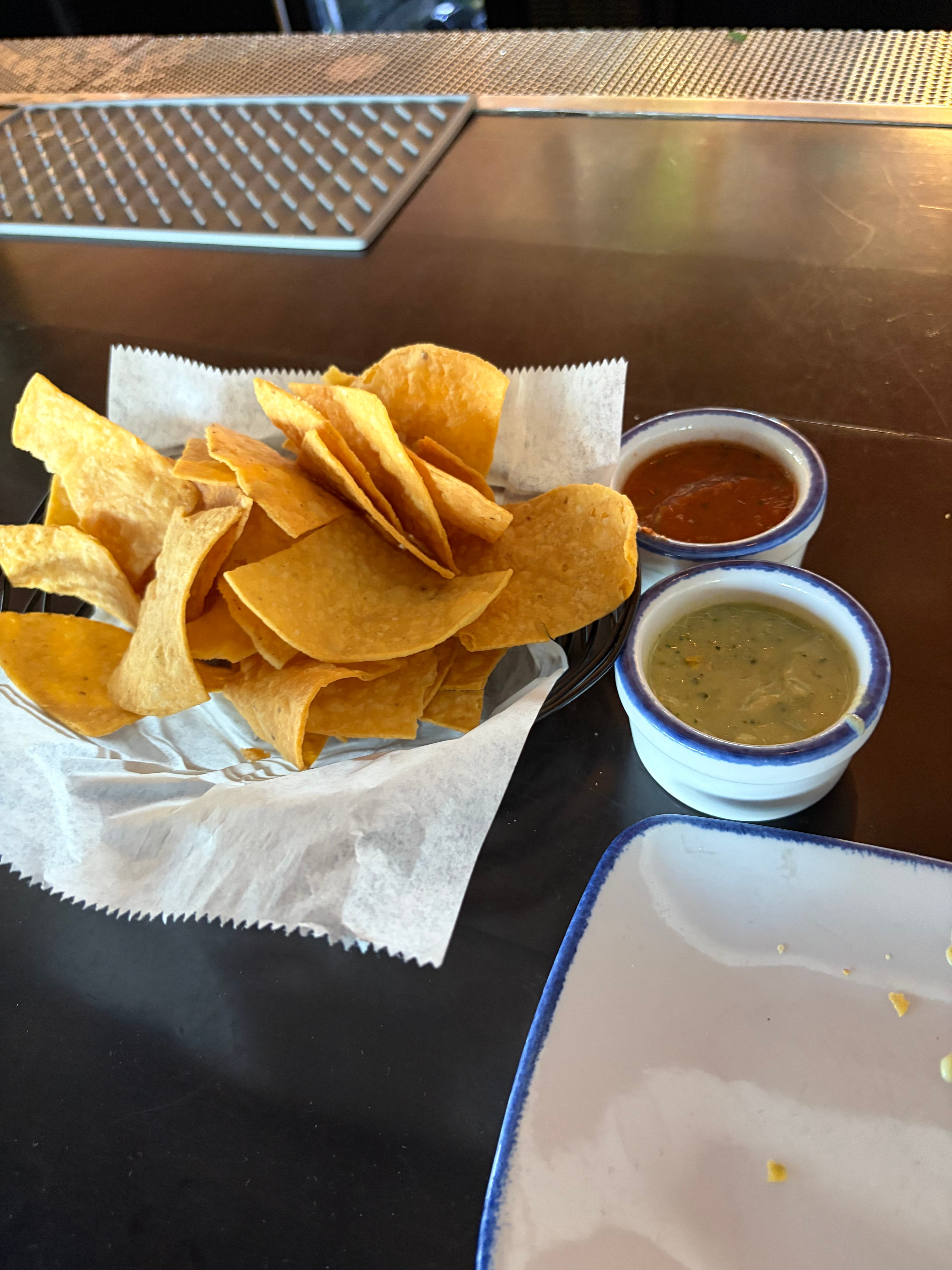
30. You should always have more than one salsa.
I was never too far from green salsa in Texas, a stark contrast from the Mexican restaurants I grew up with. Though some taquerias offer entire salsa bars, the bare minimum in Texas seems to be two contrasting salsas (like the orange-green arrangement common in the Rio Grande Valley).
31. Dallas is the least Texan place in Texas.
Finance bros, social media managers, preppy high schools, and coffee shops with strange typography? Yep, that’d be New York… and also Dallas. It’s not just that the new arrivals have cultural preferences similar to their coastal-city counterparts (hot Pilates, avocado toast) — the natives feel equally separated from the rest of their state. Dallasites are least likely to have accents and most likely to honk their horn. Other Texans feel this divide, too; they consistently dismiss Dallas as snobby and materialistic. Think of it as a big city that happens to be in Texas.
Fort Worth is at least passably Texan, but most Dallas residents aren’t going there on a daily basis. That drive’s a nightmare.
32. The social benefits of roomy spaces can’t be overstated.
It’s hard to find social spaces that are physically large—bars the size of gymnasiums, coffee shops with as many rooms as houses. In dense cities they cost too much to run; in small towns they can’t draw the crowds they’re designed for. But since Texan cities are both populous and spread out, big spaces thrive.
Kirby Ice House, a chain of bars in Houston, taught me the value of having multiple distinct subspaces within a space. Each location I visited had a big indoor bar, a bigger backyard-style patio, a lounge area with comfier chairs, and a nook with those basketball arcade machines I last played as a 13-year-old at Dave and Buster’s. I noticed people lingering for much longer than they would at a corner bar in Boston. If you’re trapped in a single room, it’s hard not to grow antsy.
Large spaces are also more forgiving to people not in a buying mood. Once I went with a friend to a tiny wine bar in Manhattan; we snagged one of maybe four sit-down tables. Being much less experienced at bars (and still wary of mocktails) I made the mistake of ordering nothing. That felt uncomfy! When you can slip into a crowd and it’s unrealistic to police everyone’s consumption, people relax. It’s easier to convince someone to go out if they know they can just tag along.
Where high density makes big spaces too costly, I see parks as the most promising large venues for social connection. It doesn’t get roomier than not having a ceiling. Can cold-climate cities find a way to make them palatable in winter? I don’t know how expensive greenhouse coverings are, but I think they’d go a long way.
33. You might be able to get complimentary soda at the bar.
On two separate occasions, I ordered soda at a bar, but the bartender waved me off when I offered payment. This wasn’t a friendly local comping my purchase out of hospitality, it was not charging from the get-go. I’m not sure if this was sanctioned behavior but found it notable since it has never happened to me anywhere else.
34. There’s magic in the West Texas desert.
Just when West Texas was getting a little too eerie—highways lit only by emergency call boxes, ornate ranch gates adjacent to vast empty tracts of land—its beauty pulled me back in. A shoutout to El Paso, my favorite big city in Texas. Brilliant mountain sunsets with orange hanging in the air forever. Thriving mom-and-pop shops of every kind. The type of place where community is not a cliche.
Even if I hadn’t talked to anyone, West Texas would’ve stuck in my mind. It’s so liminal that the most ordinary things (getting gas, walking down a street) take on a mystical quality you don’t fully appreciate until you’ve left.


35. High-level brisket has spread across the state.
This is a pretty recent development; credit Aaron Franklin, a pitmaster whose relentless focus on perfecting brisket earned him national renown. When Franklin mania took hold in the early 2010s (you’ll still have to wait at least two hours to taste his meats), other hobbyists were inspired to make the leap. If all you want is a Texas Trinity plate—for the uninitiated that’s brisket, ribs, and sausage—you’re good to go from Fort Worth to the Valley to Odessa. Today, the movers and shakers in Texas BBQ stand out with fusion cuisine and high-quality side dishes.3
36. Border Patrol checks seemed cursory.
Heading into El Paso and the Rio Grande Valley, I noticed the occasional border patrol vehicle perched on the side of the road, the way a state trooper might try to catch speeders; they weren’t interacting with anybody. Once you leave those regions, though, you need to pass through a checkpoint. I readied myself for the questioning my dad always handled when we drove into Canada: what’s the reason for your visit? Where are you staying? Any cash over $10,000? Instead, all I had to do was verbally confirm my citizenship.
37. Certain pop songs have specific dances that everyone at the dancehall seems to know.
The two songs that got people to break out into a coordinated dance multiple times, Kesha’s “Take It Off” and Ed Sheeran’s “Shivers”, are just about the last I would have pegged as dancehall favorites. Did I miss some TikTok trends?
38. Austin still has character.
People love saying Austin isn’t what it used to be. That’s true—but I found it distinctive anyway. One example: no other Texas city has such a strong culture of hanging out in parks. The highly communal coffee shops in North Austin allayed my fears of a city overtaken by transient tech workers. As for the transplants, there are as many from within Texas as there are from outside, and the former group has a lot of variety. Casino el Camino, the wonderful dive bar that became my home base, always had an eclectic crowd. And there’s definitely still a “weird” art scene going. (On my first day I met friends who gather at each other’s houses to read plays; on my last, a man who performs swordfighting demonstrations.)
39. House rice and beans recipes are half the fun.
Eating Mexican food in New England, you can write off the rice and beans as a commodity—it’ll look and taste roughly the same wherever you are. To my delight, places in Texas put their own spin on it. The Hi-Ho’s rice was brown and the beans thick; at Magoo’s Place in Alpine the rice came out red, bursting with warm chunks of tomato; Ninfa’s in Houston uses yellow rice and lighter beans dressed with cheese.
40. Texas A&M is lowkey a cult.
They kind of admit it, too. I mean, what other school has an entire Wikipedia page exhaustively listing its rituals? Their alumni are known for wearing their class rings everywhere in public for their whole lives, a practice unprecedented among other student bodies. Walking by a seemingly normal garage in Houston, I was taken aback by parking spots reserved for Aggies. Most people I met, even those with Aggie friends, had the same thing to say about A&M: they’re weird.
A few superlatives…
Best place to meet people: Mozart’s, a coffee shop nestled on the shores of Lake Austin. Expansive wooden patios evoking a summer camp, steady but never overwhelming crowds, the calmness brought on by the water… I could spend afternoons there forever.
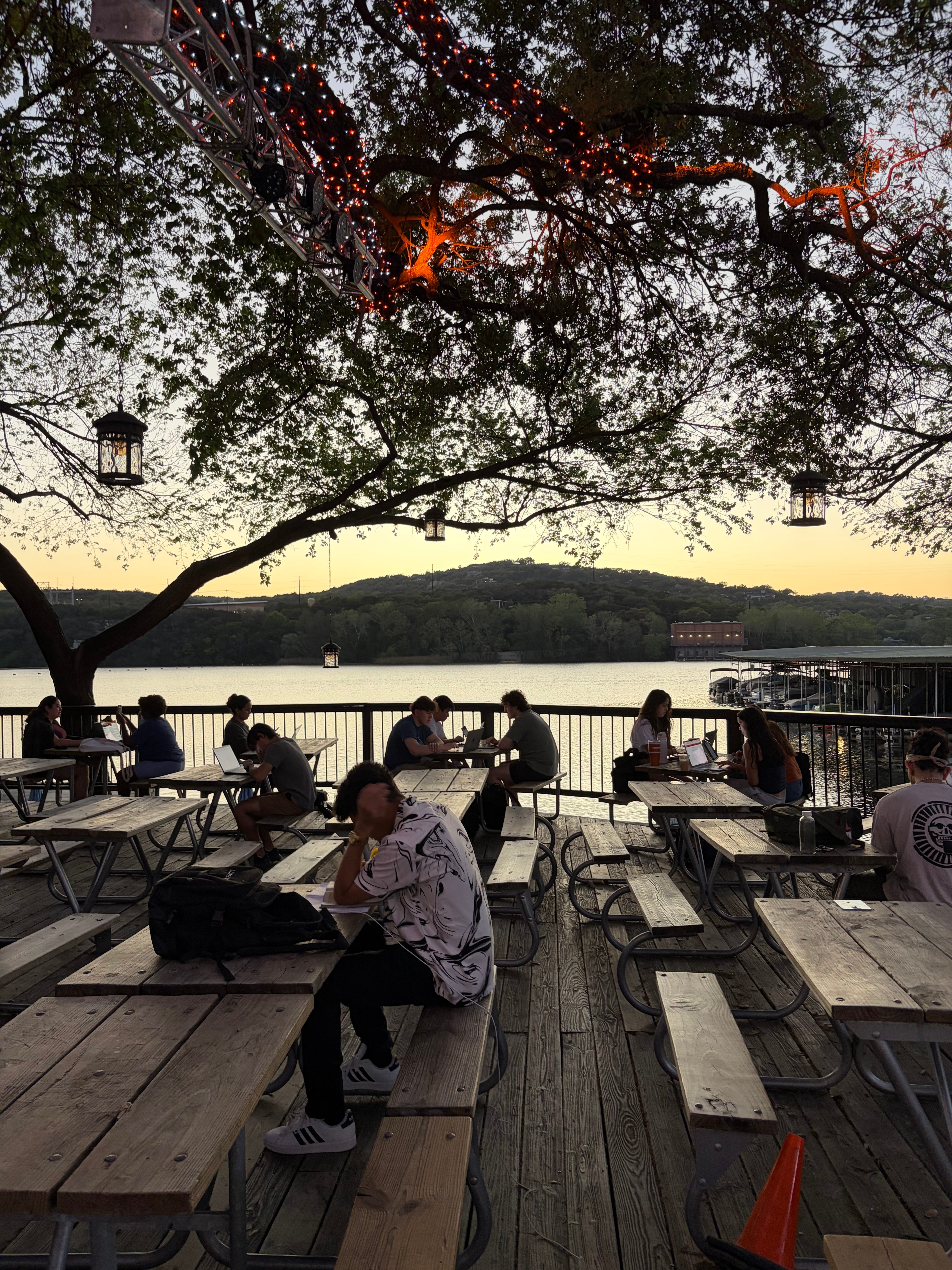
Favorite unplanned conversation: When I overheard a gray-haired gentleman and a much younger woman collaborating on a song in my otherwise-empty hotel lobby one evening.
Person I’d never have met without this trip: The cattle hauler who grew up in a 2,000-person town west of Wichita Falls.
Place I felt most foreign: El Hop Shop, a metalhead bar 20 minutes from the Mexican border.
This was another wonderful trip and I am deeply thankful to everyone who opened their world to me. I fear I may not even have done it justice. (I wasn’t great about keeping notes in the moment this time; much of writing this was reconstructing what I’d seen and heard.)
I’ll be back on the road next week, and I promise it won’t take two months before you hear from me about it :)
Texas
February 14 - April 4, 2026
Where I stayed
Feb. 14-15 - Longview
Feb. 16-17 - Corpus Christi
Feb. 18-21 - Harlingen
Feb. 22-25 - Boerne
Feb. 26 - Alpine
Feb. 27-Mar. 2 - El Paso
Mar. 3-6 - Midland/Odessa
Mar. 7-8 - Lubbock
Mar. 9-10 - Amarillo
(Mar. 11-13 - Moore, Okla.)
Mar. 14 - Waco
Mar. 15-20 - Houston
Mar. 21-25 - Austin
Mar. 26-27 - Abilene
Mar. 28-29 - Wichita Falls
Mar. 30-Apr. 3 - Frisco
Compare that to 78 for the average Tatte location in Boston!
Intergenerational friendships seem more common in highly religious parts of the U.S., which I don’t think is a coincidence; church is one of the few settings where they’re not only normalized but encouraged.
Many of the sides I tasted were skippable even at places with tremendous meats; I suspect they stay on menus mainly out of respect to tradition.
Reading this article made this transplant realize just how un-Texan I am. But don’t blame me, I live in Dallas…